
Swimming Pools
Information and professional help for residential swimming pools, including equipment, water care, cleaning, and repair needs.
Serving Scottsdale, Arizona & surrounding areas
Mon–Fri 8am–6pm · Sat 9am–2pm
Scottsdale Swimming Pool Repair
Get clear answers for pump, filter, heater, plumbing, leak, and control problems, with repairs based on the actual fault instead of assumptions.
Diagnose Before Repair
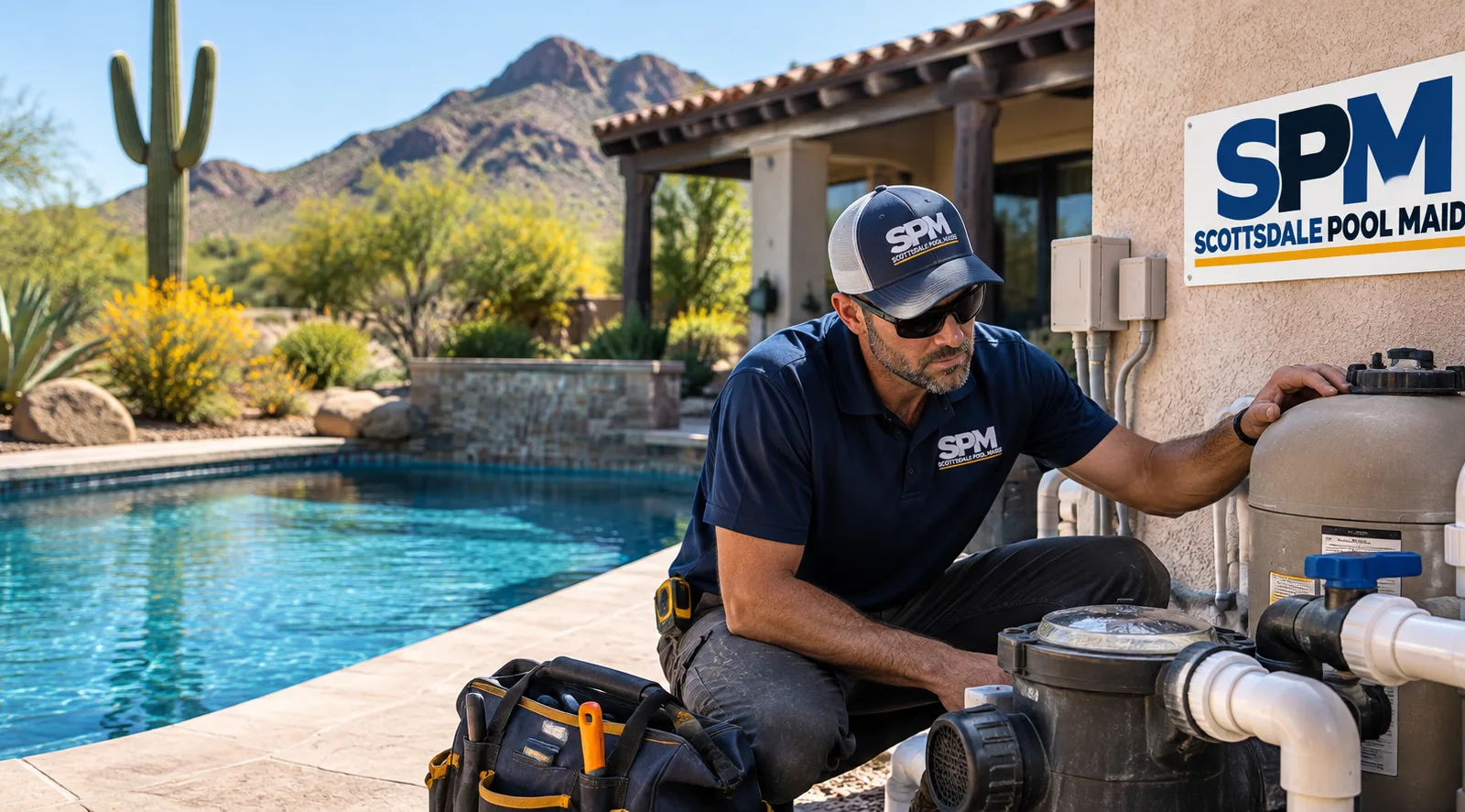
Pool repairs Scottsdale homeowners request often begin with familiar symptoms: weak circulation, cloudy water that returns after treatment, unusual equipment noise, air in the pump basket, water loss, or controls that stop responding. Scottsdale Pool Maids evaluates the full operating system before recommending work.
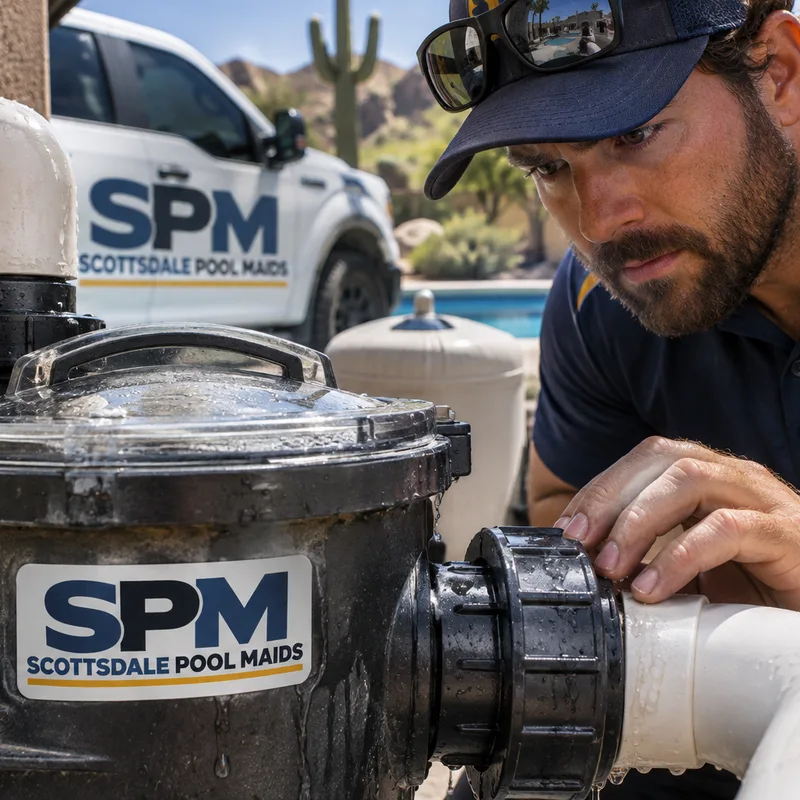
Diagnosis may include checking pump priming, filter pressure, valves, visible plumbing, electrical controls, heater operation, and signs of leakage. That matters because similar symptoms can have different causes. Poor return flow, for example, may point to a clogged basket, dirty filter, suction restriction, failing pump component, or plumbing issue.
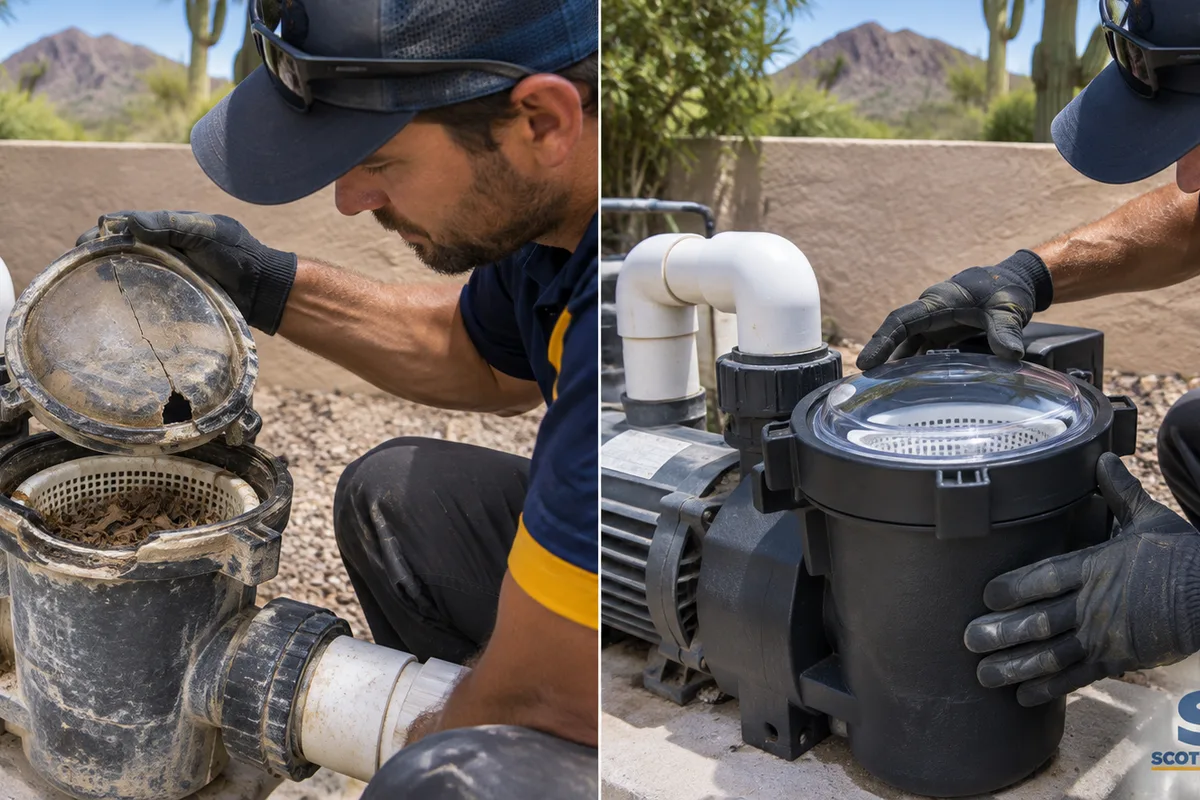
Scottsdale's intense summer heat also puts pool equipment under sustained demand. Sun exposure can be hard on seals, lids, wiring, and plastic components, while mineral scale can affect tile, heaters, salt cells, and other water-contact surfaces. A sound repair addresses the failed part and the conditions around it so the system can return to normal operation.
Complete Pool Care
Information and professional help for residential swimming pools, including equipment, water care, cleaning, and repair needs.
Ongoing professional service for water condition, routine care, equipment observation, and the practical needs of an operating residential pool.
Routine maintenance helps manage water chemistry, circulation, filtration, and equipment condition through Scottsdale's long swimming season.
Regular cleaning removes surface debris, brushes walls and steps, and clears baskets so the pool stays presentable and circulation is supported.
A local resource for pool care, equipment concerns, cleaning, repairs, and larger improvement projects.
Remodeling updates worn or dated pools through coordinated changes to finishes, tile, coping, waterline details, and selected pool components.
Resurfacing replaces a deteriorated interior finish to address rough texture, staining, exposed aggregate, or widespread surface wear.
Renovation combines selected structural, finish, equipment, and design updates into a coordinated plan for an aging pool.
Targeted tile cleaning removes calcium deposits and mineral buildup from the waterline while accounting for the tile and surrounding finish.
Repair Expectations
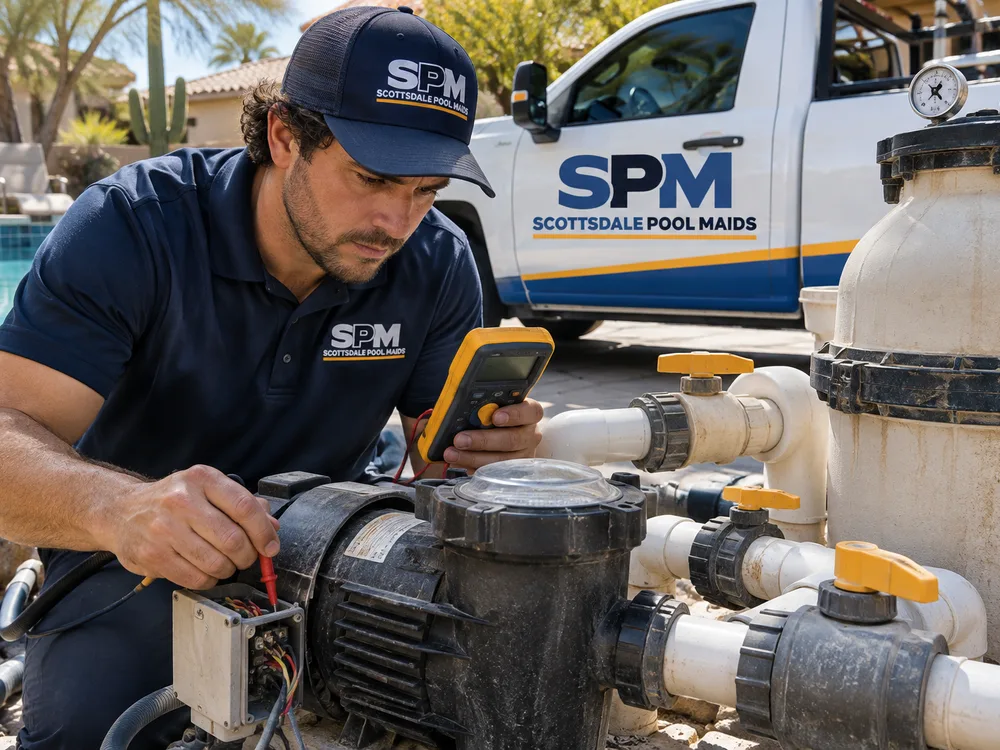
The inspection starts with the reported symptom, then checks related equipment and operating conditions. Pressure readings, flow behavior, visible leaks, unusual sounds, error codes, and component condition help narrow down the cause.
Repair decisions account for the failed component, equipment age, compatibility, and the condition of connected parts. When replacement is the more reasonable path, the scope should identify what changes and why.
Pumps, filters, valves, plumbing, heaters, sanitizing equipment, and automation work together. Checking the connected system helps reveal restrictions, air intrusion, electrical faults, or control problems that can imitate component failure.
High heat, direct sun, dust, and mineral-heavy water can affect exposed equipment and water-contact surfaces. Repair planning should account for scale, weathered seals, brittle fittings, restricted flow, and heat-related wear.
A useful repair scope identifies the observed problem, recommended work, and parts involved. It also distinguishes confirmed faults from additional issues that may become visible after equipment is opened or tested.
Local Repair Focus
Scottsdale Pool Maids provides swimming pool repair in Scottsdale, Arizona.
The work centers on identifying why a pool or its equipment is not operating correctly, then defining an appropriate repair. That can involve circulation, filtration, heating, plumbing, controls, sanitizing equipment, or visible water loss.
Trust starts with a diagnosis that connects the symptom to a specific fault. Homeowners should understand what was inspected, what needs attention, and whether the practical choice is adjustment, repair, or replacement. Scottsdale Pool Maids keeps the discussion focused on the pool's condition and the work needed to restore dependable operation.
Repair Pricing
Pool repair in Scottsdale typically costs about $150 to $500 for minor service and common component repairs, while pump, filter, heater, automation, plumbing, or leak-related work may range from $500 to $3,000 or more. Equipment replacement and underground repairs can exceed that range.
Final price depends on diagnosis time, parts, equipment type, access, system age, electrical or plumbing work, and whether hidden damage appears after disassembly. The exact cost is confirmed after the pool and affected equipment are inspected.
From Symptom to Verification
Explain the symptom, when it started, whether it is constant or intermittent, and any recent equipment work, water loss, error messages, or changes in circulation.
The affected equipment and connected system are checked under operating conditions when possible. The inspection may cover pressure, flow, valves, plumbing, controls, electrical supply, leaks, and visible component wear.
The findings are translated into a practical scope that identifies the likely cause, recommended work, required parts, and any conditions that could change the job after disassembly.
Approved work is completed, then the repaired system is operated and checked. Verification may include priming, pressure, flow, leak observation, control response, or heater and sanitizing equipment operation.
A small equipment symptom can signal a larger circulation, plumbing, or electrical problem. Have the cause checked before continued operation causes additional wear.
Request ServiceLocal Service
Scottsdale Pool Maids works throughout Scottsdale, including established communities with aging systems and newer areas where advanced controls and integrated equipment require careful diagnosis.
Established homes and mature outdoor spaces often have pools with older plumbing layouts, replaced equipment, or mixed-generation controls that require careful system tracing.
Custom pools may combine heating, water features, automation, and multiple circulation lines, so accurate diagnosis depends on understanding how those components interact.
Newer pool systems can include variable-speed pumps, automated valves, integrated controls, heaters, and sanitizing equipment that require compatible parts and systematic troubleshooting.
Larger residential lots may have long plumbing runs, exposed equipment pads, water features, and complex circulation layouts that affect pressure, priming, and leak diagnosis.
Established properties may have compact equipment areas, older pool components, or systems modified over time, making access and component compatibility important repair considerations.
Mid-century and later homes can have pools with aging underground lines, older filters, or equipment upgraded in stages, which calls for inspection of the complete circulation system.
Diagnostic Details
Practical Answers
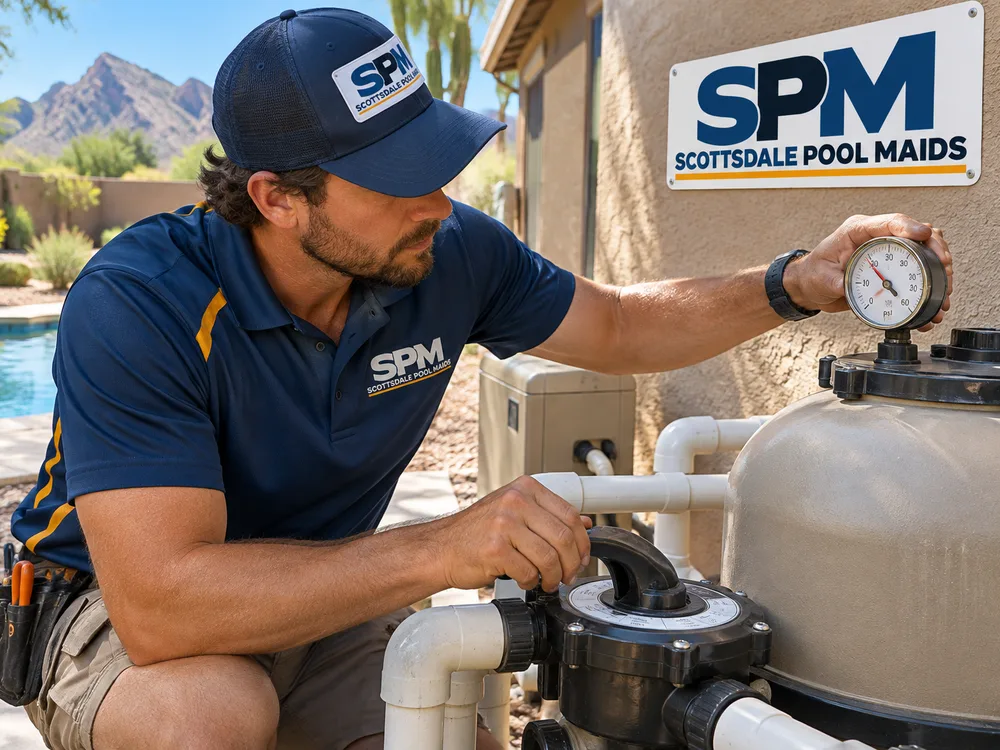
Scottsdale Pool Maids can inspect problems involving circulation, pumps, filters, heaters, valves, plumbing, controls, sanitizing equipment, and visible water loss. The reported symptom and equipment setup determine which tests are appropriate.
Arrange an inspection promptly if equipment is leaking, repeatedly losing prime, making grinding sounds, tripping a breaker, showing heater faults, or failing to circulate water. Shut down equipment when continued operation could create an electrical, overheating, or dry-running risk.
Turn it off if there is active leaking near electrical components, smoke, a burning odor, severe grinding, repeated breaker trips, or a pump running without water. Otherwise, leaving the system in its usual configuration can help reproduce an intermittent fault.
Yes, visible plumbing and equipment leaks can be inspected as part of pool repair. Water loss may also come from the pool shell, fittings, underground lines, or normal evaporation, so the next diagnostic step depends on where evidence appears.
Provide the equipment type, symptoms, error messages, when the issue began, and any recent service or power interruption. Photos of the equipment pad or visible leak can also help define what needs inspection.
Yes, equipment age and system design affect diagnosis, parts availability, and compatibility. Older pools may have modified plumbing or discontinued controls, while newer systems may use variable-speed pumps, automation, sensors, and integrated components.
Scottsdale Pool Maids serves residential areas across Scottsdale, including McCormick Ranch, Gainey Ranch, DC Ranch, North Scottsdale, Old Town Scottsdale, and South Scottsdale. Pool design and equipment layouts vary across these established and newer communities.
Describe the symptom and affected equipment. Scottsdale Pool Maids will help identify the right next step for inspection, diagnosis, and repair.