
White or Colored Plaster
Traditional cement-based plaster provides a clean appearance and can be tinted to influence water color. It requires balanced startup chemistry and consistent care to limit etching, scaling, and discoloration.
Serving Scottsdale, Arizona & surrounding areas
Mon–Fri 8am–6pm · Sat 9am–2pm
Pool Resurfacing · Scottsdale, Arizona
Renew a rough, stained, or cracked pool interior with careful preparation and a finish selected for your pool, water chemistry, and design goals.

A durable resurfacing result depends on accurate diagnosis, sound preparation, appropriate material selection, and controlled startup care.
Condition First
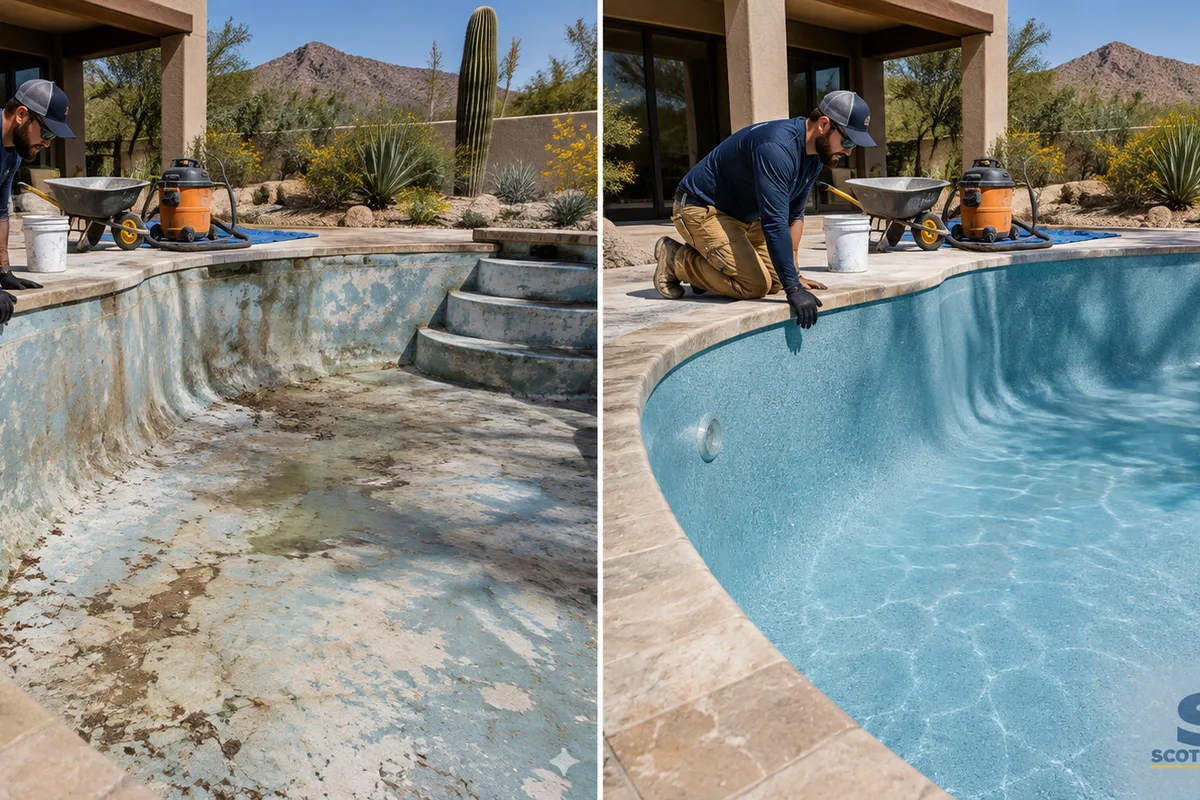
Pool resurfacing in Scottsdale, AZ addresses an interior that has become rough, discolored, etched, delaminated, or difficult to keep clean. Scottsdale's intense sun, high evaporation, and long swimming season put sustained demands on pool finishes. Water chemistry matters too. Scale can form when calcium, pH, and total alkalinity remain out of balance, while aggressive water can etch cement-based finishes.
Resurfacing is more than applying a new coat. The pool must be drained safely, the existing finish evaluated, and weak material removed or prepared to accept the new surface. Visible cracks also need classification. A superficial finish crack calls for a different response than movement in the pool shell or plumbing-related water loss.
Scottsdale Pool Maids approaches each project by inspecting the interior, waterline, fittings, steps, benches, and transitions before defining the scope. We are Scottsdale's local pool service, matching the preparation and finish plan to the pool's actual condition rather than treating every worn surface the same way.
Repair or Resurface?
A pool interior does not need replacement because of every stain or calcium deposit. Some deposits respond to professional cleaning or water chemistry correction. Resurfacing becomes the better choice when the finish itself has deteriorated, exposed aggregate is uncomfortable, plaster is flaking, or widespread etching has left the floor and walls difficult to maintain.
Warning signs include sharp or rough areas underfoot, hollow-sounding spots, recurring rust-colored marks, widespread mottling, exposed gunite, and cracks through the finish. Persistent water loss requires separate leak testing because a new surface will not repair a leaking pipe or failed fitting.
The age of a finish can provide context, but condition is the deciding factor. A well-maintained surface may remain serviceable longer than one exposed to repeated chemical imbalance. Pools in established areas such as McCormick Ranch and Gainey Ranch can also have earlier finish systems or prior resurfacing layers that need close inspection before another material is applied.
Material Selection
Traditional cement-based plaster provides a clean appearance and can be tinted to influence water color. It requires balanced startup chemistry and consistent care to limit etching, scaling, and discoloration.
Quartz finishes combine cement with colored quartz aggregate. They offer more color and texture choices than standard plaster and can provide greater resistance to routine chemical and physical wear.
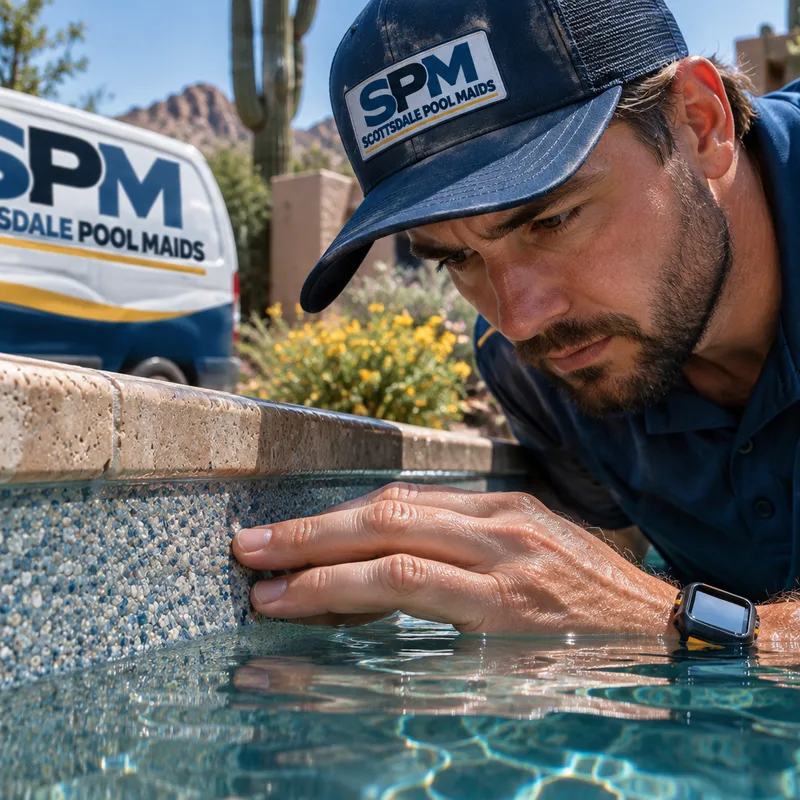
Pebble finishes expose rounded natural aggregate for a textured appearance. Aggregate size, color blend, and exposure method affect both the feel underfoot and the final water color.
A polished finish is mechanically refined after application, producing a smoother feel while retaining the visual depth of aggregate. The installation process and polishing quality strongly affect the result.
Preparation Through Startup
We examine the pool interior, steps, benches, waterline, fittings, and visible cracks. Finish selection, access, repairs, and startup responsibilities are documented before work begins.
The pool is drained using an appropriate discharge plan, and nearby decking and property are protected. Groundwater and hydrostatic conditions must be considered before an empty pool is left exposed.
Preparation may involve chipping out weak material, removing hollow areas, cutting around fittings, and creating a clean bonding profile. The method depends on the existing finish and its adhesion.
Approved repairs are completed before the finish is installed. Structural movement, active leaks, damaged fittings, or failing waterline tile may require additional work outside a basic resurfacing scope.
The selected plaster or aggregate mix is applied to the prepared shell. Troweling, exposure, washing, or polishing is completed according to the finish system.
Refilling begins without interruption to reduce the chance of a fill line. Startup includes prescribed brushing, circulation, filtration, and chemistry adjustments while the cement-based surface cures.
Budget and Scope
Pool resurfacing in Scottsdale typically costs about $6,000 to $15,000 for a standard residential pool, while larger pools, premium aggregate finishes, or extensive repairs may exceed that range. Basic plaster is generally the lower-cost option; quartz, pebble, and polished materials cost more.
Final price depends on pool size and depth, finish selection, demolition method, access, existing delamination, crack repairs, steps, benches, fittings, and waterline work. A written scope should distinguish resurfacing from optional tile, deck, or equipment work. Exact cost is confirmed after an on-site inspection.
Desert-Aware Installation
Scottsdale's hot, dry climate increases evaporation, which leaves dissolved minerals behind as water exits the pool. That concentration can encourage scale when water balance is not managed. Direct sun can also make finish color and water appearance look different throughout the day, so samples should be considered in outdoor light rather than under showroom lighting alone.
Property access varies across the city. A pool in Old Town Scottsdale may have tighter side-yard access and less staging room, while larger lots in North Scottsdale may allow easier equipment placement but involve longer material routes to the pool. Homes near the McDowell Sonoran Preserve often use earth-toned palettes, making pebble and quartz blends a natural design consideration rather than a requirement.
Finish installation is only part of the result. The refill and startup period has a direct effect on the appearance of a new cement-based surface. Water should not be shut off during the initial fill, and chemicals should be introduced according to the finish manufacturer's startup procedure. Regular brushing removes plaster dust and supports an even cure.
Scope Before Work
A useful proposal identifies the finish product and color, preparation method, included repairs, treatment around fittings, refill responsibility, startup plan, and exclusions. It should also state whether waterline tile, drain covers, return fittings, and pool lights are being retained or replaced.
Ask how hollow or delaminated material will be handled and what happens if hidden damage is found after draining. Confirm who manages initial chemistry and how long routine brushing will be required. If the pool has a known leak, shifting crack, or plumbing concern, that issue should be diagnosed before a cosmetic surface is installed.
Color expectations deserve a direct conversation. Cement-based finishes can show natural variation, and the perceived water color changes with pool depth, sunlight, sky conditions, surrounding materials, and the selected aggregate. Reviewing physical samples helps, but no small sample can reproduce every condition in a full pool.
Get a written resurfacing scope that identifies the preparation, finish system, repairs, refill, and startup plan before work begins.
Request ServicePractical Answers
Many straightforward residential resurfacing projects require about one to two weeks for draining, preparation, repairs, finish application, refill, and initial startup. Weather, pool size, access, hidden delamination, and added tile or repair work can extend the schedule. The pool then needs finish-specific startup care before normal swimming and chemical routines resume.
Yes, but high summer temperatures require careful scheduling, material handling, and refill coordination. A cement-based finish should not sit empty after application, and the initial fill should continue without interruption. Milder weather may offer a more comfortable work window, but the pool's condition and the finish manufacturer's requirements matter more than the calendar alone.
Choose based on budget, preferred texture, appearance, and willingness to follow the required maintenance. Plaster offers a traditional smooth look, quartz adds color and wear resistance, and pebble provides a more textured aggregate finish. Scottsdale's strong outdoor light can intensify or soften colors depending on pool depth and surroundings, so review samples outside.
Resurfacing can address superficial finish cracks, but it does not automatically correct structural movement or plumbing leaks. A crack that continues through the shell, recurring water loss, or wet soil near pool equipment calls for diagnosis before resurfacing. Necessary repairs should be identified in the written scope.
No, waterline tile and coping can often remain when they are secure and in acceptable condition. Loose tile, failed grout, damaged coping, or a deteriorated transition may make replacement practical while the pool is empty. These items should be priced separately unless the resurfacing proposal explicitly includes them.
Swimming must wait until the pool is full, circulation is operating, water chemistry is stable, and the finish installer permits use under the selected material's startup instructions. Cement-based finishes commonly need frequent brushing and controlled chemistry during the early cure period. Salt chlorine generators are often kept off initially according to manufacturer guidance.
A controlled startup manages plaster dust, pH, alkalinity, calcium balance, circulation, and brushing while the new cement-based finish cures. Scottsdale's evaporation can concentrate dissolved minerals, so testing and adjustment are especially important. Poor startup practices can contribute to scale, etching, streaking, or uneven color.
Tell Scottsdale Pool Maids what you are seeing in the pool, and arrange an assessment of the finish, repair needs, material options, and expected schedule.
Service areas
Each area page covers what we see in local pools, a map, and answers to common questions from homeowners there. Or browse every service area on the map.