
Water Testing and Chemical Balancing
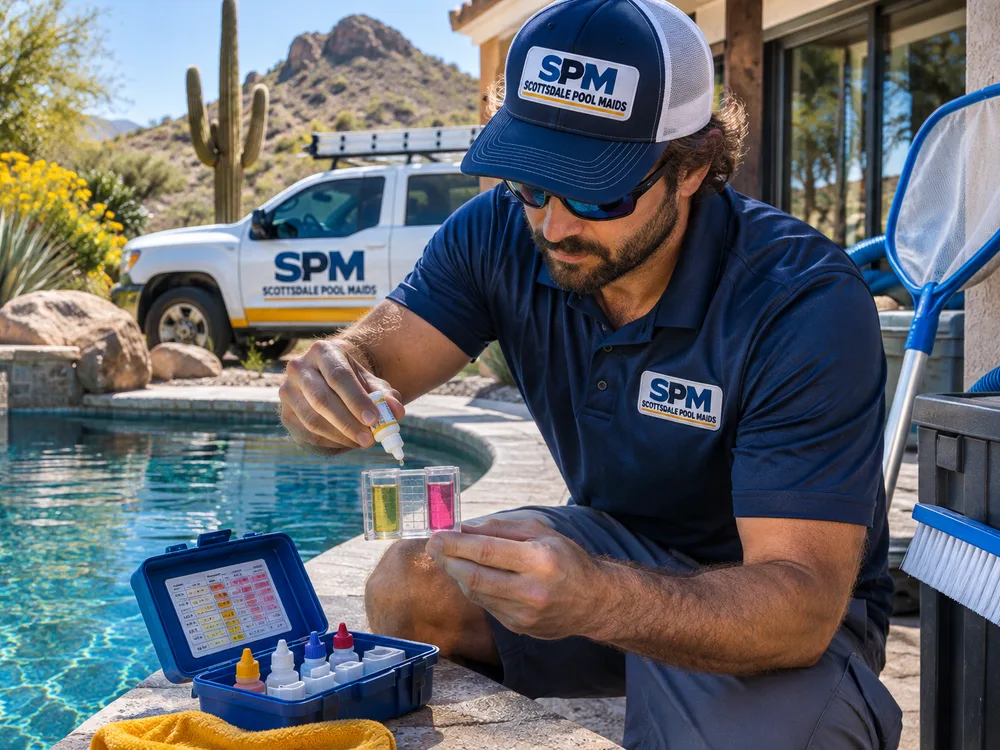
Pool water is tested and adjusted according to its current readings. Sanitizer, pH, alkalinity, stabilizer, and calcium hardness are considered as part of the overall water balance.
Serving Scottsdale, Arizona & surrounding areas
Mon–Fri 8am–6pm · Sat 9am–2pm
Pool Cleaning · Scottsdale, Arizona
Dependable routine care that keeps your water balanced, surfaces clean, and circulation equipment checked through every season.

Scottsdale sun, dust, monsoon debris, and heavy swimming loads can change water conditions between routine visits.
Consistent Routine Care
A clean pool takes more than removing visible leaves. Effective pool cleaning in Scottsdale includes testing the water, adjusting sanitizer and pH, brushing exposed surfaces, clearing baskets, and checking whether water is moving through the system correctly. Scottsdale's intense sun can consume chlorine quickly, while dust, pollen, monsoon debris, and heavy swimming loads can change water conditions between visits.
Scottsdale Pool Maids provides routine care based on the pool's actual condition rather than a quick, identical checklist for every property. Our pool specialists serving Scottsdale, AZ pay attention to water clarity, chemical readings, debris, surface condition, and equipment operation during service. That consistent observation helps catch developing concerns such as weak circulation, scale, algae growth, or a clogged basket before they become larger problems.
Routine service is suited to full-time homes, seasonal residences, and properties where the pool needs dependable attention while the owner is away. The goal is straightforward: maintain clean water, stable chemistry, and a pool that is ready when you want to use it.
Appearance, Water, and Flow
The exact work depends on the pool, weather, and service agreement, but a thorough visit addresses both appearance and water condition. Technicians may skim floating debris, brush walls and steps, vacuum or use the installed cleaning system, empty skimmer and pump baskets, and remove debris from the tile line. Water testing guides chemical adjustments rather than relying on appearance alone.
Core readings include free chlorine and pH. Total alkalinity helps stabilize pH, while cyanuric acid protects chlorine from rapid ultraviolet degradation in outdoor pools. Calcium hardness also matters because water that is out of balance can contribute to scale or become aggressive toward plaster and equipment. Technicians should assess these readings together, since changing one can affect the others.
Cleaning also involves watching circulation. Low return flow, an unusual filter-pressure reading, air in the pump basket, or a cleaner that no longer moves normally can signal a blockage, leak, dirty filter, or equipment issue. Identifying the symptom during routine service allows the cause to be investigated instead of masking the problem with extra chemicals.
What Each Visit May Include
Pool water is tested and adjusted according to its current readings. Sanitizer, pH, alkalinity, stabilizer, and calcium hardness are considered as part of the overall water balance.
Leaves and floating debris are removed, while walls, steps, benches, corners, and other low-circulation areas are brushed to disrupt dirt and early algae growth.
Skimmer and pump baskets are cleared as appropriate. Return flow, pump operation, filter pressure, and the pool's cleaning system are observed for signs that service may be needed.
The waterline is checked for oils, residue, and developing mineral deposits. Routine attention can reduce buildup, although established calcium scale may require separate treatment.
Filter pressure and water flow help indicate when cleaning or backwashing may be due. Cartridge, sand, and diatomaceous earth filters have different service procedures.
Visible leaks, unusual sounds, weak flow, damaged fittings, and other concerns found during cleaning can be documented so repair options can be discussed.
Desert-Aware Maintenance
Scottsdale pools face a combination of strong ultraviolet exposure, airborne desert dust, seasonal wind, and sudden debris during monsoon storms. Sunlight breaks down unstabilized chlorine, so sanitizer demand can rise even when the water looks clear. Dust settles on steps and floors, adds load to the filter, and can collect in areas where circulation is weak.
Properties near the McDowell Sonoran Preserve may experience windblown dust and plant debris, making basket capacity and filter condition especially relevant after gusty weather. In older central Scottsdale neighborhoods, established trees can add leaves, blossoms, and organic material to the water. Larger lots in North Scottsdale may also have long plumbing runs or water features that deserve attention when flow changes. These conditions do not call for indiscriminate chemical use. They call for testing, physical cleaning, and a circulation system that is working as intended.
Service needs can change after a dust storm, heavy swimmer use, landscaping work, or an equipment interruption. A good pool cleaning company in Scottsdale responds to those conditions instead of assuming that every week will require the same treatment.
From Review to Report
The technician assesses water appearance, surface debris, visible pool condition, and accessible circulation equipment. Existing concerns and recent changes can be noted before routine work begins.
Chemical readings are checked with suitable test methods. Results guide the amount and type of adjustment needed rather than chemicals being added by habit.
The pool is skimmed and brushed, baskets are cleared as appropriate, and settled debris is addressed according to the cleaning system and service scope.
Chemicals are added based on test results, pool condition, and water volume. Some treatments require circulation time or temporary limits on swimming.
The technician checks for visible signs of poor flow, abnormal pressure, leaks, or cleaning-system trouble and communicates concerns that may require diagnosis or repair.
Planning Your Service
Weekly pool cleaning in Scottsdale typically costs about $120 to $250 per month for a standard residential pool. Larger pools, attached spas, water features, heavy debris, and chemical-inclusive plans can raise the monthly price. One-time cleanups and green-pool treatments are usually quoted separately because labor and chemical demand vary widely.
Final pricing depends on pool size, surface condition, service frequency, landscaping debris, equipment access, water chemistry, and whether filters or repairs need separate work. The exact cost is confirmed after the pool and service scope are reviewed.
Compare the Full Scope
The best pool cleaning service for your property is one that tests before treating, follows a clear scope, and communicates when conditions change. Ask what each visit includes, whether chemicals are included in the quoted rate, how filter cleaning is handled, and what happens when a technician finds an equipment problem. A low monthly figure is difficult to compare if basic chemicals, filter work, or storm cleanup carry separate charges.
Consistency matters because pool chemistry can move quickly in hot weather. Ask how missed visits, holidays, locked gates, pets, and seasonal occupancy are handled. If the property is vacant for part of the year, agree on how equipment alarms, leaks, low water levels, or storm debris will be reported.
It also helps to distinguish maintenance from repair. Cleaning can reveal weak flow, a leaking pump seal, a malfunctioning valve, or a damaged cleaner, but replacing parts and diagnosing electrical or hydraulic faults is separate work. A written scope should identify routine tasks and explain how additional work is authorized. That gives the owner a practical way to compare Scottsdale pool cleaners on service quality rather than price alone.
Get a clear maintenance scope based on your pool, equipment, debris load, and seasonal use before service begins.
Request ServicePractical Answers
Weekly service is a common starting point for an outdoor residential pool in Scottsdale. Strong sunlight, desert dust, swimmer use, landscaping debris, and monsoon weather can increase the need for testing or cleanup. The right schedule depends on the pool's size, circulation, surroundings, and whether someone monitors it between visits.
Chemical inclusion depends on the service agreement and should be stated clearly in the quote. Some Scottsdale pool cleaning services include routine balancing chemicals but price specialty treatments separately. Clarify how chlorine, acid, salt, stabilizer, phosphate treatment, and unusually high chemical demand are handled before agreeing to a plan.
Cloudy or green water can often be corrected, but it may require a separate recovery treatment rather than a standard cleaning visit. The technician needs to test the water and assess circulation, filtration, algae growth, debris, and pool surface condition. Scottsdale heat and sunlight can accelerate sanitizer loss, so delays may increase the treatment required.
Routine visits may include monitoring filter pressure, but a full filter cleaning is often scheduled and priced separately. Cartridge filters must be opened and cleaned, sand filters are typically backwashed when conditions call for it, and diatomaceous earth filters have their own maintenance requirements. The service agreement should identify the filter type and procedure.
Remove large debris, check baskets, confirm the pump has adequate water flow, and have the pool chemistry tested after significant storm debris enters the water. Fine dust can settle on the floor and increase filter load, while organic debris can consume sanitizer. Avoid operating equipment if the water level is too low or the pump cannot prime.
Yes, scheduled pool cleaning can continue while a property is unoccupied if access and communication are arranged in advance. Owners should provide gate instructions, explain how pets are managed, and establish who can approve repairs. Regular visits are especially useful for spotting low water, leaks, stopped equipment, or storm debris during an extended absence.
The start time depends on route availability and the pool's initial condition. A clear, balanced pool may move directly into routine service, while a neglected or green pool may need an initial cleanup first. Access, equipment condition, water level, and chemical readings are usually reviewed before the recurring scope is confirmed.
Tell Scottsdale Pool Maids about your pool, current concerns, and preferred service schedule. We will help define a practical cleaning plan and identify any initial work needed before routine care begins.
Service areas
Each area page covers what we see in local pools, a map, and answers to common questions from homeowners there. Or browse every service area on the map.