
Interior Resurfacing
Replace a rough, discolored, delaminating, or heavily patched interior with plaster, quartz aggregate, or pebble-based finishes. Material choice affects appearance, texture, price, and startup requirements.
Serving Scottsdale, Arizona & surrounding areas
Mon–Fri 8am–6pm · Sat 9am–2pm
Pool Remodeling · Scottsdale, Arizona
Renew an aging pool with practical repairs, updated finishes, safer access, and custom details planned for Arizona heat and daily outdoor living.
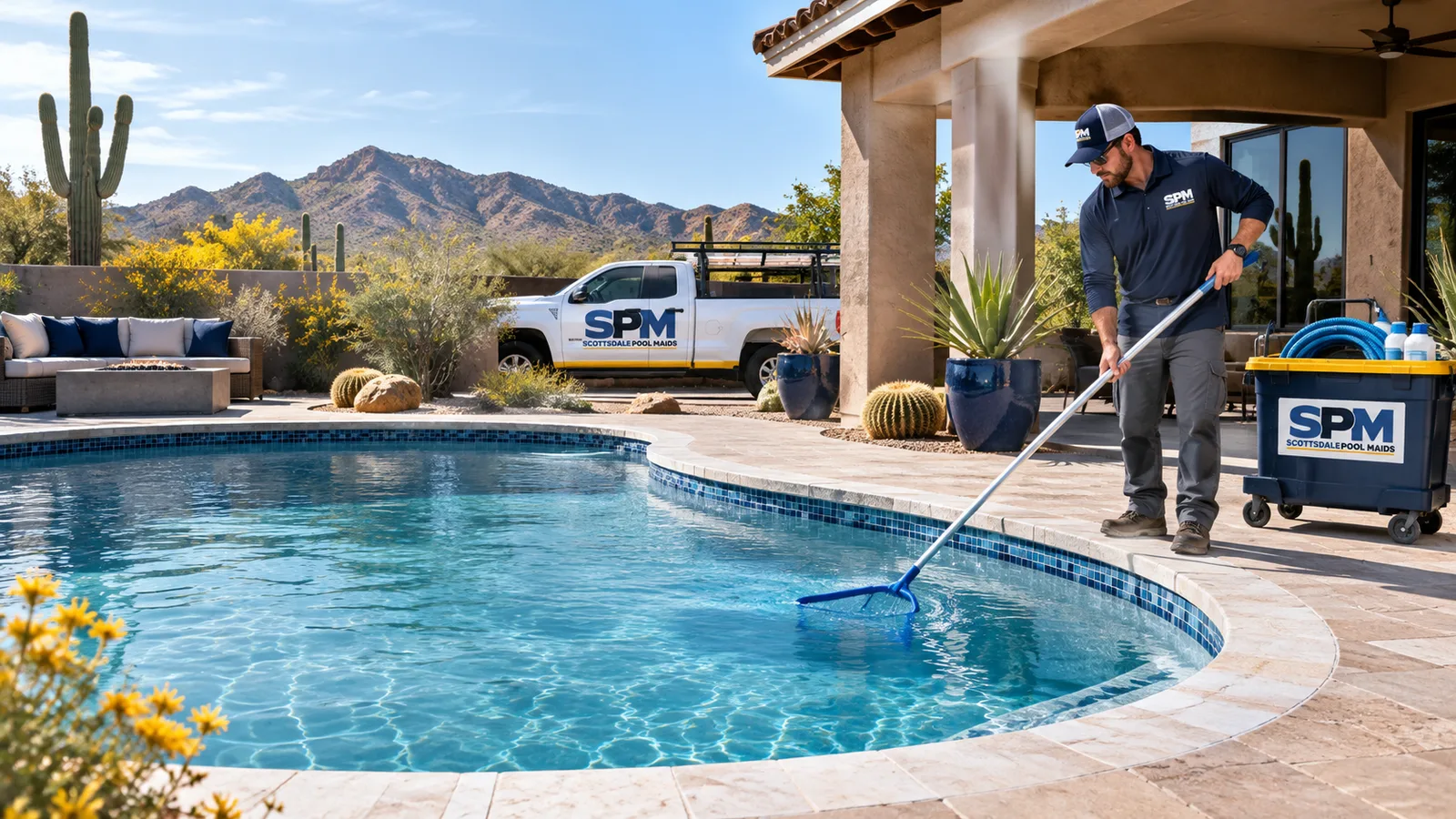
Pool remodeling Scottsdale homeowners can rely on starts with the pool's condition, not a list of fashionable upgrades. Cracked or stained finishes, loose waterline tile, worn coping, outdated lighting, and inefficient circulation components each require a different response. Scottsdale Pool Maids evaluates how these elements work together, then develops a scope that addresses needed repairs before cosmetic changes are made.
We are an experienced pool team in Scottsdale, AZ that plans remodeling work around the area's intense sun, long swim season, and outdoor spaces that often connect directly to patios and entertaining areas. Those conditions affect finish color, material temperature, scheduling, and how the pool will be used after construction. The goal is a cohesive pool that looks current and is practical to maintain, rather than a collection of unrelated upgrades.
Some projects need a focused resurface and new tile. Others call for coping replacement, deck-edge repairs, lighting updates, plumbing corrections, or equipment changes. A written scope should identify what is being removed, what remains, which materials are included, and how the pool will be started after the new interior finish is applied.
Remodeling Options
Replace a rough, discolored, delaminating, or heavily patched interior with plaster, quartz aggregate, or pebble-based finishes. Material choice affects appearance, texture, price, and startup requirements.
Renew loose or dated tile and replace damaged coping around the pool perimeter. The coping profile, joint condition, and connection to the surrounding deck should be reviewed together.
Update pool lighting or refresh existing water details when the structure and plumbing support the change. Electrical and hydraulic requirements need to be established before finishes are ordered.
Modify entry points, add a handrail, or reshape usable areas when the existing shell allows it. Structural changes require more planning than surface-only work and may affect permits.
Correct identified circulation issues and consider pumps, filters, controls, or sanitizing components as part of the larger project. Equipment should be sized to the pool and its plumbing.
Coordinate the pool edge with adjoining concrete, pavers, or other decking. Drainage, elevations, expansion joints, and heat underfoot matter as much as color.
Desert-Suited Selections
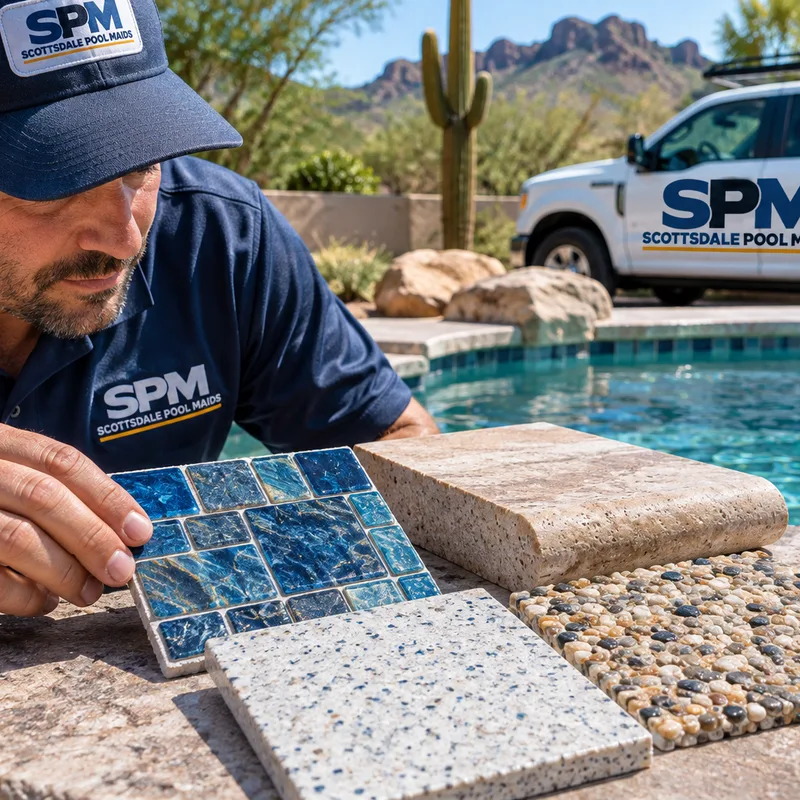
Direct sun and high summer temperatures make material selection especially important. Very dark coping and decking can become uncomfortable underfoot, while finish colors can look different in full Arizona sun than they do on a small sample. Samples should be reviewed outdoors, with attention to texture, glare, and how the color relates to the house and hardscape.
Pool interiors generally fall into plaster, quartz aggregate, and exposed aggregate categories. Standard plaster offers a clean appearance but requires careful water chemistry and startup. Quartz blends add color and a denser finish. Pebble-based interiors provide a textured aggregate appearance and come in several grades. No finish is maintenance-free; balanced water and proper brushing during startup help protect the completed surface.
Scottsdale's hard water can leave visible scale at the waterline and on spillways. That makes tile color, surface texture, and ongoing chemistry practical decisions rather than purely decorative ones. Salt chlorination also does not eliminate the need to manage pH, calcium hardness, total alkalinity, and cyanuric acid. Where new coping meets an existing deck, the joint must allow for movement instead of being treated as a simple cosmetic seam.
From Inspection to Startup
The first review covers the interior, tile, coping, visible shell conditions, fittings, access, and relevant equipment. We also discuss appearance, comfort, maintenance concerns, and the changes that matter most.
The proposed work is separated into repairs, finish replacements, and optional upgrades. Materials are selected with installation details in mind, including edges, transitions, grout, fittings, and deck connections.
Before work begins, the plan should address drainage, site access, debris removal, material staging, utility considerations, and any required approvals. City of Scottsdale permit requirements depend on the scope, especially when structural, electrical, gas, or plumbing systems change.
The pool is drained under an appropriate plan, designated finishes are removed, and the exposed surfaces are checked. Necessary shell preparation, plumbing work, tile installation, coping work, and other approved changes follow in the proper sequence.
The new interior is installed, inspected, and prepared for an uninterrupted refill. Water should not be stopped partway through the initial fill because doing so can leave a visible ring on a fresh finish.
Fresh plaster and aggregate finishes require a controlled startup that may include brushing, filtration, and frequent water testing. The exact procedure should follow the finish manufacturer's requirements.
Budget Planning
A Scottsdale pool remodel typically costs about $10,000 to $25,000 for resurfacing with tile work, while broader projects with coping, decking, structural changes, or major equipment updates may range from $25,000 to $75,000 or more. These are general local estimates, not quotes.
Final price depends on pool size, finish grade, demolition, shell condition, access, plumbing or electrical work, and deck repairs. A site consultation confirms the exact scope and cost before work starts.
Cause-Based Remodeling
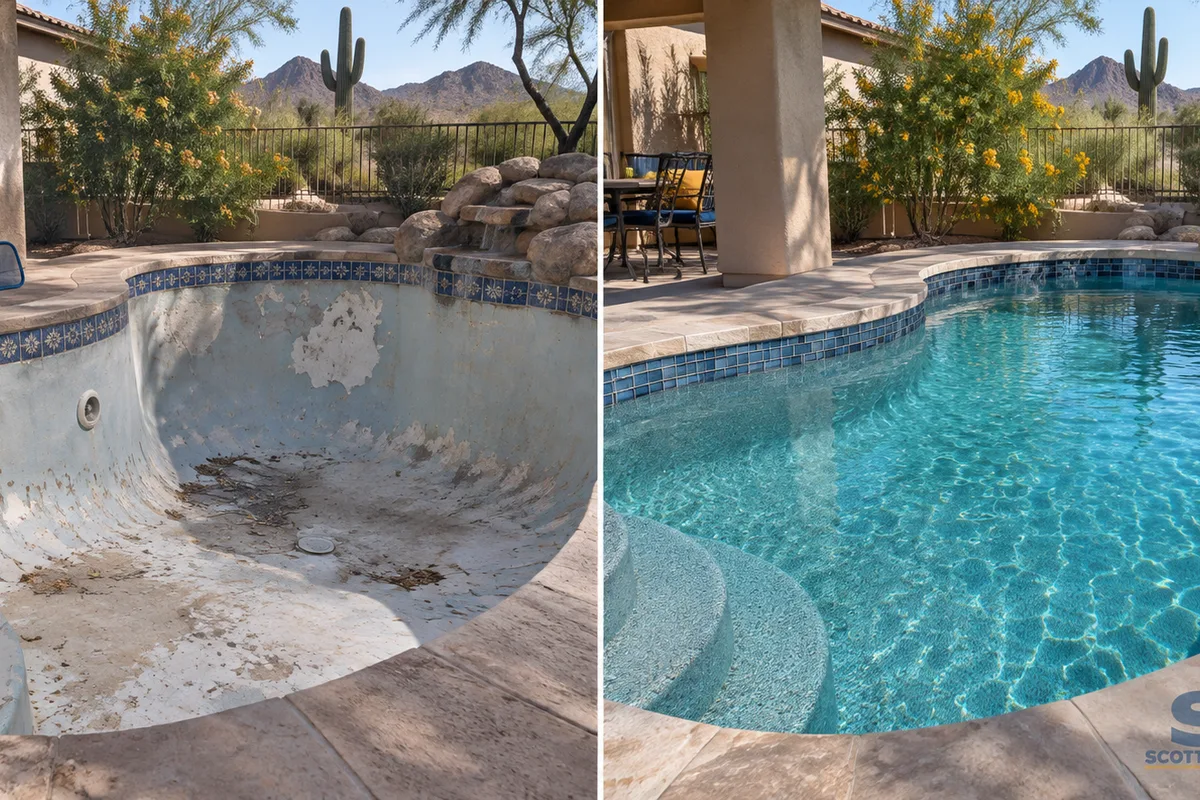
A durable pool remodeling Scottsdale AZ project separates visible symptoms from their causes. A persistent water loss concern may call for testing before new finishes cover the shell. Cracked coping may indicate movement at the pool-to-deck joint. Poor circulation can stem from blocked lines, damaged fittings, an unsuitable equipment setup, or a hydraulic layout that needs review. Covering these conditions with new tile or plaster can lead to avoidable rework.
The same principle applies to optional upgrades. A new light needs a compatible niche, bonding, wiring, and controls. A water detail needs adequate plumbing and pump capacity. Added steps or benches affect the pool shell and water volume. These details belong in the scope before demolition begins.
Properties in established areas such as McCormick Ranch may have mature outdoor spaces where access and protection of existing patios need careful planning. In North Scottsdale, larger lots and long equipment runs can affect staging and hydraulics. Old Town properties may have tighter access between the street and backyard. These site conditions can influence labor and equipment choices even when two pools appear similar.
Clear Scope, Fewer Surprises
A useful proposal should name the interior finish and color, tile allowance or selection, coping material, demolition limits, repair allowances, included fittings, and startup responsibility. It should also explain exclusions. Terms such as “resurface pool” are too broad on their own because preparation methods and finish systems vary.
Ask how hidden damage will be documented and approved if it appears after demolition. Confirm whether deck repairs include only the immediate pool edge or a larger area. If the remodel changes electrical, plumbing, gas, or structural components, determine who handles applicable permits and inspections. Homeowners with an association should also check architectural requirements before selecting visible materials.
Timing matters in Scottsdale because a drained pool and fresh finish should not sit unattended in extreme heat. The work sequence should reduce idle time between surface preparation, finish application, and refill. Access also deserves an early discussion. Gate width, nearby walls, landscaping, slopes, and the distance to the street can determine what tools and debris-removal methods are practical.
Before approving a pool remodel Scottsdale AZ proposal, compare scope rather than the final price alone. One estimate may include tile removal, fittings, surface preparation, startup, and cleanup while another treats those items as additions.
A clear inspection and written scope can show which repairs belong in the current remodel and which upgrades can wait.
Request ServicePractical Answers
A straightforward resurfacing and tile project often takes about two to four weeks, while structural changes, decking, or complex equipment work can extend the schedule. Material availability, inspections, access, weather, and conditions uncovered after demolition all affect timing. The pool also needs an uninterrupted refill and a finish-specific startup before normal use resumes.
Yes, pool remodeling can be completed during summer, but extreme heat requires tighter scheduling and careful material handling. Fresh interior finishes should be filled promptly, and crews need to follow the manufacturer's temperature and curing guidance. Many homeowners prefer cooler periods when practical, but the right timing depends on scope and material availability.
Permit requirements depend on what changes. A finish-only renovation may be treated differently from work that alters the shell, electrical system, gas line, plumbing, barriers, or equipment configuration. The City of Scottsdale is the proper authority for properties within city limits, and the planned scope should be checked before construction begins.
Equipment should be replaced when its condition, compatibility, or performance supports the expense, not simply because the pool is being resurfaced. Remodeling is a convenient time to inspect the pump, filter, heater, controls, valves, and visible plumbing because access may already be coordinated. Any replacement still needs correct sizing and code-compliant installation.
No pool finish prevents hard-water scale, but aggregate and quartz finishes can offer different textures and visual tolerance for mineral deposits than plain plaster. Water chemistry remains the main control. Finish selection should account for desired texture, budget, color, manufacturer care requirements, and the household's willingness to maintain calcium and pH levels.
Yes, the pool can often be remodeled while the existing deck remains, provided the deck and pool-edge connection are sound. The inspection should check coping, expansion joints, drainage, elevation changes, and cracked areas. If only part of the deck changes, matching an older color or texture may be difficult.
They can sometimes be added, but feasibility depends on the shell, dimensions, reinforcing requirements, plumbing, and intended water depth. These are structural alterations rather than finish upgrades. They require a project-specific design review and may trigger City of Scottsdale permitting and inspection requirements.
The pool should be filled without interruption and started according to the finish manufacturer's instructions. A typical startup includes frequent brushing, filtration, and close testing of pH, alkalinity, calcium hardness, and sanitizer. The first days matter because improper startup can contribute to scale, mottling, or surface damage.
Tell Scottsdale Pool Maids what is worn, dated, or no longer working for your backyard. We will help define a practical scope, review material choices, and set clear expectations before construction begins.
Service areas
Each area page covers what we see in local pools, a map, and answers to common questions from homeowners there. Or browse every service area on the map.