
Media Cleaning
A controlled stream of surface-appropriate media can break up bonded mineral deposits. Pressure, distance, angle, and media choice must be adjusted to reduce the risk of scratching tile or eroding grout.
Serving Scottsdale, Arizona & surrounding areas
Mon–Fri 8am–6pm · Sat 9am–2pm
Pool Tile Cleaning · Scottsdale, Arizona
Remove stubborn calcium deposits and waterline stains with a cleaning method selected for your tile, grout, and pool finish.
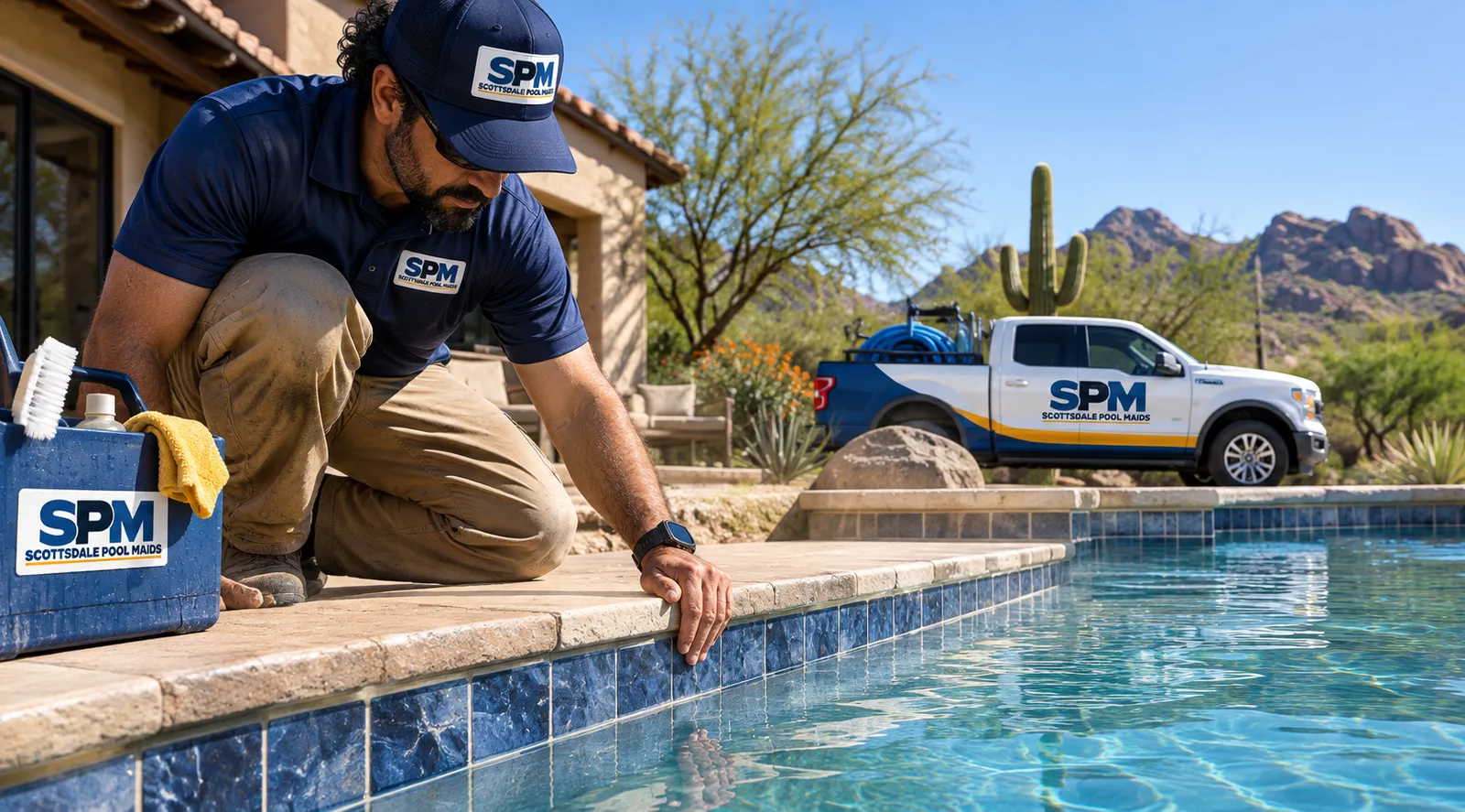
Professional pool tile cleaning Scottsdale AZ homeowners request should remove mineral buildup without trading one problem for another. The wrong abrasive, pressure, or chemical can dull glazed tile, pit grout, or leave residue in the pool. A proper inspection identifies the tile material, the type and thickness of the deposit, grout condition, access, and any fragile areas before cleaning begins.
Scottsdale's dry climate increases evaporation, which leaves dissolved minerals behind at the waterline. As that cycle repeats, a pale chalky band can harden into crusted scale. Scottsdale Pool Maids approaches the work as pool specialists serving Scottsdale, selecting equipment and settings for the actual surface rather than relying on one method for every pool.
The goal is a consistent finish across the visible waterline. That includes cleaning corners, steps, raised walls, spillway edges, and other tiled areas included in the agreed scope. Existing chips, etched tile, failing grout, or permanent discoloration are identified so the expected result is clear before work starts.
Calcium, Residue, and Stains
Calcium carbonate commonly appears as a white, flaky, or chalk-like deposit near the waterline. It may respond to controlled media cleaning or a suitable chemical treatment, depending on the tile and severity. Calcium silicate is usually harder, rougher, and more strongly bonded. It can require a slower process and may indicate a longer-running water chemistry issue.
Cleaning may also address grime, oily residue, organic staining, and residue trapped along grout joints. These materials do not always respond to the same technique as mineral scale. Identifying what is on the surface prevents unnecessary abrasion and helps produce an even result.
Waterline tile can include glazed ceramic, porcelain, glass, stone, and decorative mosaic. Glass and polished surfaces require particular care because scratches or loss of sheen can be more visible than the original deposit. Natural stone also needs a compatible approach. A small test area is useful when the surface, coating, or prior treatment is uncertain.
Controlled Surface Care
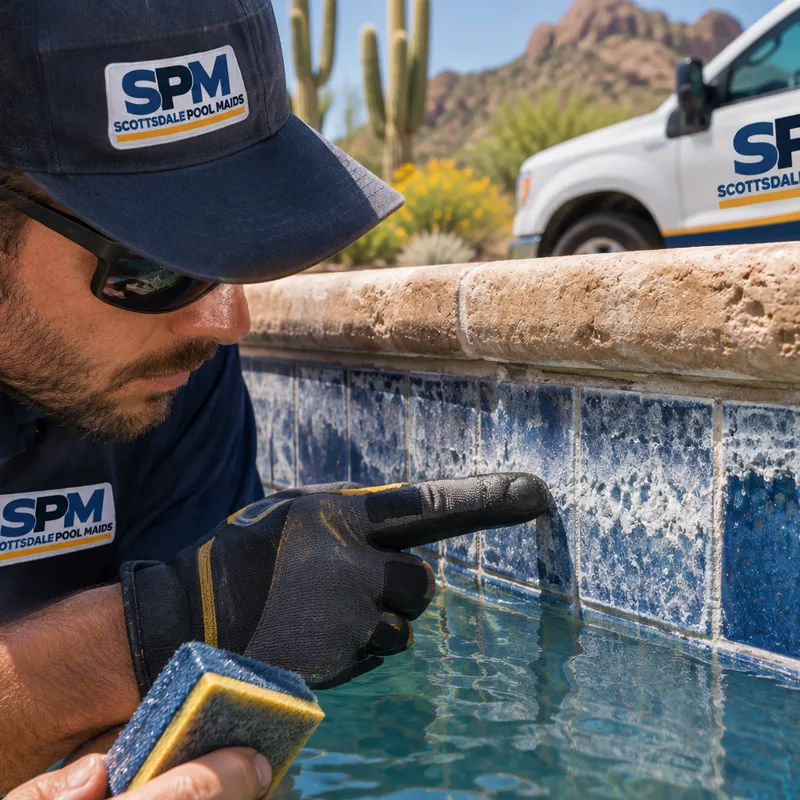
A controlled stream of surface-appropriate media can break up bonded mineral deposits. Pressure, distance, angle, and media choice must be adjusted to reduce the risk of scratching tile or eroding grout.
Compatible cleaners can soften certain deposits and residues before careful removal. The product and dwell time depend on whether the surface is ceramic, glass, porcelain, or natural stone.
Corners, mosaics, spillways, transitions, and isolated heavy deposits may need hand tools and close control. This also helps protect loose grout and delicate decorative pieces.
Spent media, loosened scale, and cleaning residue must be contained and removed from the work area. The tile is then checked for missed deposits and uneven patches.
From Inspection to Cleanup
We review the tile material, scale type, deposit thickness, grout condition, pool shape, and access. Existing damage or likely limitations are discussed before cleaning.
The waterline may need to be lowered enough to expose the cleaning area. The amount depends on the tile layout and chosen method, while unnecessary draining is avoided.
A controlled test spot helps confirm that the approach removes the deposit without visibly changing the tile finish or damaging sound grout.
The waterline and any included raised tile, steps, or spillway surfaces are cleaned methodically. Settings and hand techniques are adjusted where materials or conditions change.
Loose material and residue are removed, then the cleaned surfaces are reviewed for consistency. Any permanent etching, discoloration, or repair concern that remains is pointed out.
Desert-Aware Planning
Scottsdale's low humidity and intense summer heat can drive rapid evaporation. Pool water leaves as vapor, but dissolved calcium and other minerals remain. If the water is repeatedly topped off, those minerals can become more concentrated and form deposits where water meets tile. Splash zones and raised water features may show buildup too because they experience frequent wet-and-dry cycles.
Pools in areas such as McCormick Ranch often have long waterlines and attached spas that add corners and spillways to the cleaning scope. Properties near North Scottsdale's foothills may have raised walls, negative-edge details, or multilevel access that affects setup. In Old Town Scottsdale, tighter side access and compact lots can influence equipment placement and containment. These conditions matter when estimating labor and selecting a practical cleaning method.
Cleaning restores the accessible surface, but it does not correct the chemistry that caused the scale. Afterward, balanced pH, total alkalinity, calcium hardness, and water temperature should be considered together through the Langelier Saturation Index. Stable water chemistry and prompt attention to a returning waterline film can slow new deposits.
Pricing Factors
Pool tile cleaning in Scottsdale typically costs about $5 to $12 per linear foot, while many residential jobs fall between $500 and $1,200. Light buildup on standard ceramic tile may cost less; thick calcium, glass tile, raised walls, attached spas, and detailed mosaics can cost more.
Final pricing depends on waterline length, deposit hardness, tile material, grout condition, access, containment needs, and whether the water level must be adjusted. The exact cost is confirmed after the tile and work area are inspected.
Realistic Results
Cleaning is a good fit when deposits and surface stains are obscuring tile that remains structurally sound. It can reveal the original color and sheen, improve the appearance of the waterline, and remove rough crust that collects more residue.
Cleaning cannot reverse every condition. Mineral deposits can conceal etched glazing, faded finishes, cracked pieces, hollow tile, or deteriorated grout. If tile moves under light pressure or grout is missing, repair may need to happen before aggressive cleaning. Permanent discoloration within a tile or stone is different from material sitting on its surface, so complete removal is not always possible.
An honest assessment separates removable buildup from damage. Ask what method is proposed, whether a test area will be used, how debris will be contained, which surfaces are included, and what result is realistic. A written scope should also identify attached spas, raised walls, columns, spillways, and decorative tile if those areas need attention.
Get a clear assessment of the tile, buildup, access, and recommended cleaning method before work begins.
Check AvailabilityPractical Answers
Many residential waterlines can be cleaned within one working day, but heavy scale or complex tile details may take longer. Attached spas, raised bond beams, negative edges, mosaics, and limited equipment access can extend the work. The tile condition and total linear footage provide a more reliable schedule than pool volume.
A pool usually does not need to be fully drained solely for waterline tile cleaning. The water level is commonly lowered enough to expose the tile and provide safe working clearance. The required level depends on the cleaning method, pool design, attached spa, and location of the deposits.
Calcium can often be removed from glass pool tile, but the method must protect its reflective surface and grout. A test spot is especially useful because harsh abrasives can leave visible scratches or haze. Existing etching beneath a deposit may remain visible after the mineral layer is removed.
Sound grout can usually tolerate a correctly selected cleaning process, but loose or deteriorated joints are more vulnerable. Pressure, media, tool angle, and chemical exposure should be adjusted around weak areas. Missing grout or moving tile may require repair before cleaning continues.
There is no fixed interval because scale develops according to evaporation, fill-water chemistry, pool chemistry, and surface design. Scottsdale's hot, dry conditions can accelerate evaporation, so inspect the waterline regularly and address a developing film before it becomes a thick crust. Chemistry should be evaluated if deposits return quickly.
Pool tile cleaning removes surface deposits, but it cannot restore glaze or stone that has already been etched or discolored. A test area helps show what is removable and what may be permanent. Thick calcium can hide chips, faded tile, or weakened grout until the deposit is gone.
An estimate is more accurate with the approximate waterline length, tile material, photos of the buildup, attached spa details, raised wall measurements, and access information. Photos should include close views of the deposit and wider views of the pool perimeter. An inspection can then confirm the method and final scope.
Tell Scottsdale Pool Maids about the tile, visible deposits, and any raised features or attached spa. We will assess the condition and outline a practical cleaning plan.
Service areas
Each area page covers what we see in local pools, a map, and answers to common questions from homeowners there. Or browse every service area on the map.