
Routine Pool Cleaning
Regular care can include skimming, brushing, basket service, debris removal, and checks of visible equipment. The exact work should reflect the pool's surface, surrounding vegetation, current condition, and typical debris load.
Serving Scottsdale, Arizona & surrounding areas
Mon–Fri 8am–6pm · Sat 9am–2pm
Swimming Pool Care · Scottsdale, Arizona
Professional cleaning, balanced water, equipment troubleshooting, and practical repair recommendations for a pool that is ready when you are.
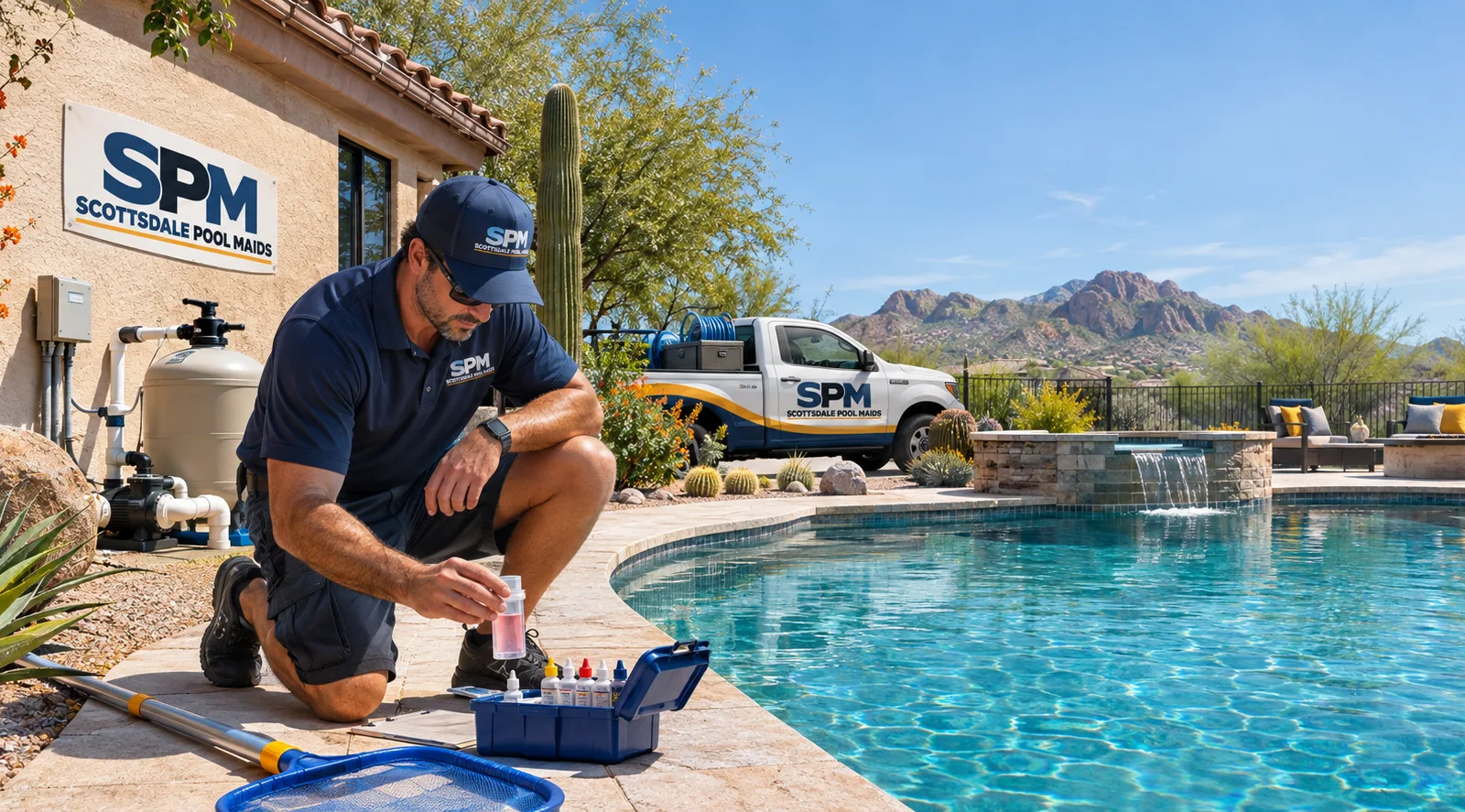
Scottsdale heat, sunlight, dust, evaporation, and monsoon debris all affect water chemistry, filtration, and equipment operation.
Consistent Local Care
Swimming pools in Scottsdale AZ face intense sun, windblown dust, monsoon debris, and long stretches of warm weather. Those conditions affect sanitizer demand, evaporation, filtration, and the amount of debris collected in baskets and filters. Consistent attention helps protect water quality and catches small equipment problems before they interrupt normal use.
Scottsdale Pool Maids handles ongoing care and repair with clear observations and practical recommendations. As a professional pool company in Scottsdale, AZ, we inspect the water and operating system as connected parts rather than treating a cloudy pool or weak return flow as an isolated symptom. The goal is stable water chemistry, dependable circulation, and a straightforward plan when equipment needs service.
A good visit should leave useful information behind. That includes what was checked, what needs attention, and whether an issue calls for immediate repair or continued monitoring. Pool owners should understand the condition of their system before approving work.
Cleaning, Water, and Equipment
Regular care can include skimming, brushing, basket service, debris removal, and checks of visible equipment. The exact work should reflect the pool's surface, surrounding vegetation, current condition, and typical debris load.
Testing should guide chemical additions. Free chlorine, pH, total alkalinity, calcium hardness, and cyanuric acid all influence water comfort, sanitation, scaling risk, and surface protection. Saltwater pools also require attention to salt level and cell condition.
Pumps, filters, valves, heaters, automation controls, lights, and sanitizing equipment can develop separate or related faults. Diagnosis starts with circulation, power, pressure, leaks, error codes, and the equipment's service condition before parts are recommended.
Cartridge, sand, and diatomaceous earth filters require different service methods. Pressure readings and return flow help determine whether the filter needs cleaning or whether a restriction, air leak, valve position, or pump issue is responsible.
Recovery begins by identifying the cause. Sanitizer loss, poor circulation, filtration problems, heavy debris, and chemistry imbalance require different corrections. Restoring clarity may involve brushing, filtration, cleaning, and repeated testing rather than one chemical addition.
Desert wind and monsoon storms can deposit leaves, dirt, and fine material quickly. Prompt removal limits staining, keeps skimmer baskets from clogging, and reduces the load on the filtration system.
Desert-Aware Maintenance
Scottsdale's dry heat increases evaporation, while strong sunlight raises chlorine demand. Adding water replaces volume but does not remove dissolved minerals, so repeated evaporation and refill cycles can contribute to scale on tile, salt cells, heaters, and other water-contact surfaces. Chemistry decisions should be based on testing rather than a fixed dose used every visit.
Pools near the open desert and foothill areas of North Scottsdale may collect fine dust and windblown plant material. Properties around McDowell Sonoran Preserve trail areas can also experience heavier airborne debris during windy weather. In established areas such as McCormick Ranch, mature landscaping may increase leaf and organic debris in skimmers. Old Town Scottsdale includes compact lots where equipment access and sound can affect repair planning. These conditions do not dictate the same schedule for every pool, but they do affect what should be inspected.
Summer care usually demands closer attention to sanitizer, water level, circulation, and filter condition. After a dust storm, running equipment without checking baskets and filter pressure can strain circulation. A visual inspection of the pool, skimmers, pump basket, filter gauge, and returns provides a better basis for deciding what comes next.
From Assessment to Next Step
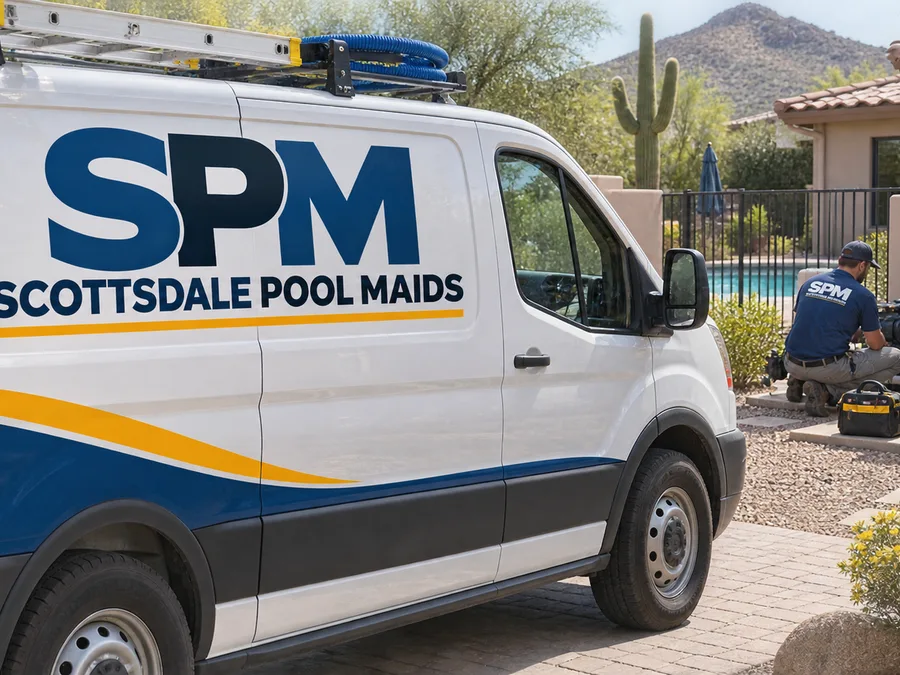
The visit starts with water appearance, debris, water level, surface condition, skimmer action, return flow, and visible equipment. Recent changes such as unusual noise, air bubbles, leaks, or an error code help narrow the inspection.
Water readings establish what needs adjustment. Results should be considered together because pH, alkalinity, calcium hardness, sanitizer, and stabilizer influence one another and can affect both comfort and equipment.
The pool is serviced according to its condition. Work may include skimming, brushing, basket cleaning, filter attention, vacuuming where appropriate, and measured chemical treatment.
The system is checked after service to confirm flow, normal pressure, valve position, and equipment response. Repairs may require a separate diagnostic process, replacement parts, or access to electrical and plumbing components.
The owner receives a clear account of observed conditions and recommended action. Urgent faults should be separated from maintenance items and improvements that can be planned later.
Cause-Based Diagnosis
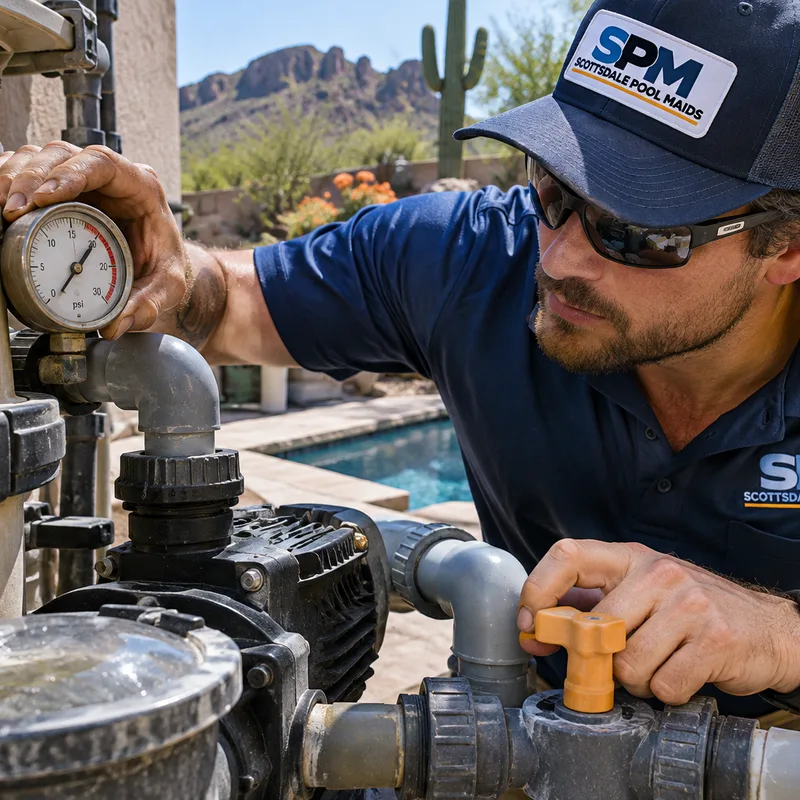
Weak circulation can come from a full basket, dirty filter, blocked impeller, suction-side air leak, closed valve, low water level, or a failing pump. A breaker that trips may point to an electrical or motor fault and should not be repeatedly reset without diagnosis. Water near the equipment pad may come from plumbing, a pump seal, filter components, heater connections, or routine filter service. Each symptom needs inspection before a repair is selected.
Equipment age matters, but age alone does not determine whether replacement is justified. Parts availability, motor condition, housing damage, energy use, compatibility with existing controls, and repair cost all affect the decision. Variable-speed pumps can support different circulation schedules, while automation systems coordinate functions such as pumps, heaters, valves, lights, and sanitizing equipment. Any replacement should be sized and configured for the actual pool and plumbing.
Visible water loss also deserves a measured approach. Evaporation is common in Arizona, especially during hot, dry, or windy conditions, but persistent loss may indicate a leak. The pool shell, fittings, equipment, backwash line, and exposed plumbing should be considered before invasive work is proposed.
Water, Surfaces, and Equipment
Water should remain sanitary and reasonably clear, but appearance is only one measure of pool condition. Poor balance can contribute to scale, corrosion, surface damage, staining, cloudy water, or swimmer discomfort. Low circulation can reduce filtration and chemical distribution even when the water initially looks acceptable.
The equipment pad should also be part of routine observation. Drips, air under a clear pump lid, unusual vibration, damaged wiring, noisy bearings, cracked housings, and abnormal filter pressure can signal developing problems. Early attention may allow a targeted repair before the fault affects other components.
For homes with attached spas, water features, in-floor cleaning systems, heaters, or automation, the operating sequence matters. Valve actuators, schedules, temperature settings, and pump speeds must work together. Changing one setting without understanding that sequence can reduce skimming, interfere with heating, or leave a feature without adequate flow.
Service records make changes easier to spot. A gradual rise in filter pressure, repeated sanitizer loss, or a recurring need to add water can reveal a pattern that a single visit might miss.
If your pool is cloudy, losing water, making unusual noise, or overdue for consistent care, arrange an assessment that separates immediate needs from work that can be planned.
Request ServicePractical Answers
Many residential pools benefit from weekly service, although the right frequency depends on use, season, trees, dust exposure, equipment, and water condition. Scottsdale's intense sun and summer heat can increase sanitizer demand and evaporation, while monsoon debris can create extra cleaning and filtration work between routine visits.
Pool size, current condition, service frequency, surface type, attached spas or water features, debris load, chemical needs, and equipment accessibility all affect cost. A consistently maintained pool generally has a different service scope than green-water recovery or a property with frequent storm debris. The exact price should follow an assessment of the pool and requested work.
Recurring cloudiness usually requires testing and a circulation check rather than another unmeasured chemical dose. Common factors include low sanitizer, imbalanced pH, excessive stabilizer, inadequate run time, a dirty filter, poor return flow, or fine dust after Scottsdale wind events. The cause may involve both chemistry and equipment.
The choice depends on the failed component, pump condition, parts availability, repair cost, plumbing, and compatibility with existing automation. A minor seal or lid problem may justify repair, while a damaged housing or failing motor can change the economics. Replacement equipment must be sized for the pool's hydraulic needs rather than chosen only by horsepower.
A green pool may take several days or longer to recover, depending on algae severity, water chemistry, circulation, filter capacity, debris, and whether equipment is functioning. The process can require brushing, filtration, repeated testing, filter cleaning, and controlled chemical treatment. Heavy growth or failed circulation extends the timeline.
Some water loss from evaporation is expected during hot, dry, and windy weather, but repeated loss beyond the property's normal pattern deserves investigation. Wet equipment, air entering the pump, cracks, damaged fittings, a leaking backwash line, or unexplained refill demand can justify testing. A consistent water-level comparison is more useful than a one-time observation.
Service can usually proceed once outdoor conditions are safe and equipment can be inspected. Heavy debris should be removed before it blocks baskets or overloads the filter, and electrical equipment should not be handled while exposed to unsafe wet conditions. Filter pressure and circulation should be checked after major Scottsdale dust or wind events.
Tell Scottsdale Pool Maids what you are seeing, how the pool is used, and whether the concern involves water, cleaning, circulation, or equipment. You will receive a practical next step based on the pool's actual condition.
Service areas
Each area page covers what we see in local pools, a map, and answers to common questions from homeowners there. Or browse every service area on the map.